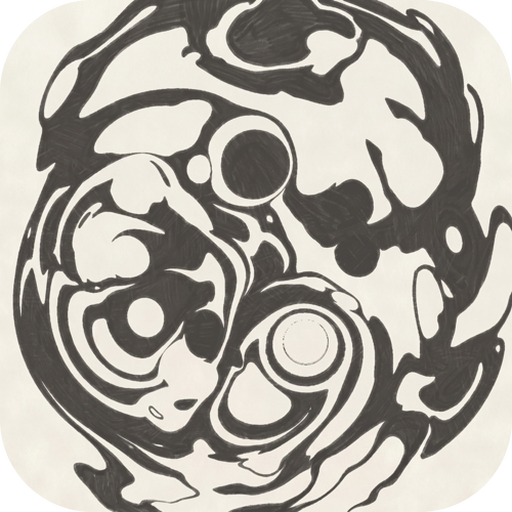
Leader
Lineage. The stepped leader of a lightning discharge and the Lichtenberg figure: a channel that advances in steps, forks, and ionizes the path it takes. In the engine’s terms it answers a finding of the spark reading: that reading lights the ridges of strain, and a strike’s own strain is a plateau — the Anod strike’s shear is a stack of triangle waves whose slope is piecewise constant, so across the blob is a set of terraces, every texel a local maximum, and non-maximum suppression thins nothing. A reader can thin a ridge and cannot invent one; line-like looks need line-like operators. The leader writes the line.
What it does. Under Anod with Glow reading on spark, the note-on strikes a stroke along a tree from the strike point beside its blast and streamers — the drop and the shear episode of the spark stay, the leader grows out of them (the author’s viewing: without the impact the bolt lost its weight); Glow reading plasma keeps 2.0’s strike bitwise. The path is a biased random walk: steps of canvas heights (thirteen texels at 1080p), the heading jittered about the strike’s pitch axis — the layout’s glide direction at the key; off the lattice, radial from the centre — a fork with probability at each step, off, the branch’s count half its parent’s, three generations deep; the trunk’s count for the velocity , from eight steps to forty. The walk’s generator is a 32-bit congruential stream seeded by the strike’s draw from the instance’s seed — the same draw the plasma’s blob phase takes — so a replay is bit-identical, and the tree is integer arithmetic on every platform; the stroke’s draw comes first, the blob’s phase draw after it.
The shear. Each segment is a slip along its own direction :
with the distance across the segment and the coordinate along it, canvas heights the window’s half-width (three texels at 1080p), equal to one over the segment and the same quintic bump over ramps of past both ends, and the slip — two to six texels. Across the band the slip is a pure shear, whatever the profile, as the tine’s; along it the ramps compress or dilate by at most , so for one sub-step and the operator is class sub-stepped, under the same rule as the burst and the wake: the per-pass slip is at most a quarter of the window’s along-length, which at these constants is one sub-step at every velocity. Every window is finite: nothing is pulled in from off the sheet.
The channel is charged. The reading lights charge only, and a strike’s charge is a small disc; the stroke walks far beyond it, into water. So the pass writes the strike’s own ink band along the segment’s core — within of the path, round caps at the joints, the band’s phase graded across as a drop’s is, the strike’s aux (its hue) with it — while the slip above stays: the leader is the ionized path, and the strain the slip leaves on it is what the reading lights. The strain buffer’s leader rides the tip (strain being added over fifty milliseconds), the afterglow holds the channel behind it in the strike’s colour, and the bloom sees the leader alone.
The episode. The stroke advances at 120 sub-steps a second — one a frame at the scripted clock, a fractional credit at any other rate — every alive branch together; a frame’s sub-steps are composed in time order in one pass per stroke, up to eight entries, so fifteen strokes are fifteen passes a frame whatever their depth. If the frame budget refuses the pass, the stroke waits a frame and loses nothing.
Gesture route. sumi_add_leader(inst, x, y, dir_x, dir_y, energy, seed)
for the stylus and the scripts: the drift along (dir_x, dir_y), the reach
from energy, the tree from seed, a band of its own from the drop counter.
Invariants
Section titled “Invariants”- The class gate. Under
--soak leaderthe bare shear (the channel’s charge off: a deposit, excluded by nature as every strike’s drop is) reads a pre-image Jacobian of min 0.763 and mean 1.00000 everywhere after one sub-step; 500 pairs of a segment and its first-order negative leave 0.15 texel of pre-image drift and hold the ink mass within 0.9 %; six thousand frames of strokes at gesture rate grow the mass by 3.4·10⁻⁵ a pass — the along-ramps’ resampling, inside the class’s rate bar — and the erosion reads below the glide tine’s. - Deterministic. The press scene with strokes twice from one seed is bitwise on the field; the plasma strikes’ field differs — the strike’s shape follows the mode.
- A ridge, not a plateau. One stroke at full velocity lights ridges 1.7 texels wide at 1080p under the reading, read beyond its strike’s blob and streamers; the blob episode under the same reading keeps a third of its lit texels with the suppression on, every one within two texels of the plasma silhouette — the suppression takes the lower terraces’ edges and nothing more. The gate’s red is this blob, reproduced on purpose.
- Branches are geometry. On the charge’s own skeleton (the channel the stroke writes, thinned, its spurs pruned) six strokes alone at end in 3.2 tips each, 1.8 more than the same six at , which end in 1.3 — a single leader’s two ends, less what the thinning takes. The strikes’ torn charge under plasma has 0.09 endpoints per hundred texels.
- The afterglow on a stroke decays to in Spark afterglow (0.359 against 0.368, on a stroke alone through the gesture route; the gate found the strain pass comparing a float against its half-rounded self, a permanent activity floor on strained texels, fixed at this step), and the leader at the tip is seven times the channel’s crest in linear light with the bloom off (0.72 against 0.10) — the channel’s gain 0.4, set here.
- Velocity is reach. The frames a stroke lives and the channel it charges beyond its strike’s blob both rise with velocity: 22, 31, 47 and 51 frames, 0.1, 2.5, 4.9 and 5.9 thousand texels at 32, 64, 96 and 127.
- The pass budget. A fifteen-voice storm of strokes at depth three costs one pass per stroke per frame of its life over the storm’s total, beside the strikes’ own drops and shear episodes, and walks out at frame 55.
What stays open. The walk was kept at the viewing and plasma stays Anod’s default reading, the stroke a setting away; dielectric breakdown (a Laplacian solve per strike) stays a later alternative if the walk ever reads as too regular, and the constants — , , , the rate — are the author’s to retune.
midi-sink 2.0.0 · AGPL-3.0 · source